Movement is Medicine - and You Don't Have to Go Hard to See Results
Exercise is one of the most powerful tools we have with PCOS. Not to shrink our bodies but to balance our hormones, improve insulin sensitivity, and feel genuinely good. Here's how to start, what works, and what the research actually says.
"I used to think I had to do intense workouts every day to make a difference with PCOS. I burnt myself out over and over again. It wasn't until I slowed down, got consistent, and found movement I actually enjoyed that things genuinely changed — my energy, my cycle, my mood. This page is everything I wish someone had told me at the start."
— My exercise journey with PCOS
57%
improvement in insulin resistance with regular exercise
150
minutes of moderate exercise recommended per week
3×
better outcomes when combining moderate excersises & strength
12 wks
to see measurable hormonal improvements
How Exercise Actually Helps PCOS
Why it matters
Exercise isn't just good for general health. it directly addresses the core drivers of PCOS. Research consistently shows that regular movement improves insulin sensitivity, reduces androgens, regulates cycles, and supports mental health. It works on PCOS at a biological level - not just a lifestyle one.
Research
A 2020 systematic review and meta-analysis published in Frontiers in Physiology found that exercise interventions significantly improved insulin resistance, body composition, cardiorespiratory fitness, and reproductive outcomes in women with PCOS — regardless of weight loss. Movement works, independent of the scale.
❋ Improves insulin sensitivity
Muscle contractions during exercise act like insulin - they pull glucose out of the blood without needing insulin. This directly targets the root driver of most PCOS symptoms.
❋ Lowers androgen levels
Studies show consistent exercise reduces circulating testosterone and other androgens - which can improve acne, hair growth, and cycle regularity over time.
❋ Reduces inflammation
Regular moderate exercise is one of the most effective natural anti-inflammatories available. It lowers CRP and other inflammatory markers elevated in PCOS.
❋ Builds metabolic health
Strength training in particular increases muscle mass - which improves your body's ability to use glucose and supports long-term metabolic health with PCOS.
❋ Supports cycle regularity
Exercise helps regulate the hormonal signals between the brain, ovaries, and adrenal glands - supporting more predictable ovulation and menstrual cycles.
❋ Improves mental health
PCOS carries a significantly higher risk of anxiety and depression. Exercise boosts serotonin, dopamine and BDNF - all of which support mood, focus and resilience.
For beginners
Where to Start - Without Overwhelm
If you're new to exercise, coming back after a long break, or feeling exhausted by PCOS fatigue — this is for you. You don't need to be fit before you start. You just need to start.
Begin with walking — seriously
A 20–30 minute walk is genuinely one of the best things you can do for PCOS. It lowers blood sugar, reduces cortisol, improves mood, and builds the habit of consistent movement. Don't underestimate it because it feels too easy.
Start with 3× per week and build from there
01
Track how you feel, not just what you did
Notice your energy, mood, sleep and cycle alongside your workouts. This data is incredibly valuable for understanding how your body responds and for building the intrinsic motivation to keep going.
A simple journal or symptom tracker works brilliantly
02
Don't skip rest — it's part of the plan
Overtraining raises cortisol which worsens insulin resistance and can suppress ovulation. Rest days are not laziness. They're when your body actually adapts and recovers. For PCOS especially, more is not always better.
2–3 rest or gentle movement days per week is ideal
03
Add a short strength session
You don't need a gym. Two to three bodyweight sessions a week — squats, lunges, push-ups, glute bridges — builds the muscle that improves insulin sensitivity. Even 20 minutes counts. The key is progressive challenge over time.
Start with 2× per week, bodyweight only
04
Find what you enjoy — and do that
Dancing, swimming, Pilates, hiking, cycling, yoga - the best exercise for PCOS is the one you'll actually do consistently. Enjoyment is not a bonus. It's the difference between a two-week stint and a lifelong habit.
Consistency beats intensity every time
05
What the research says
Types of Exercise & What Works for PCOS
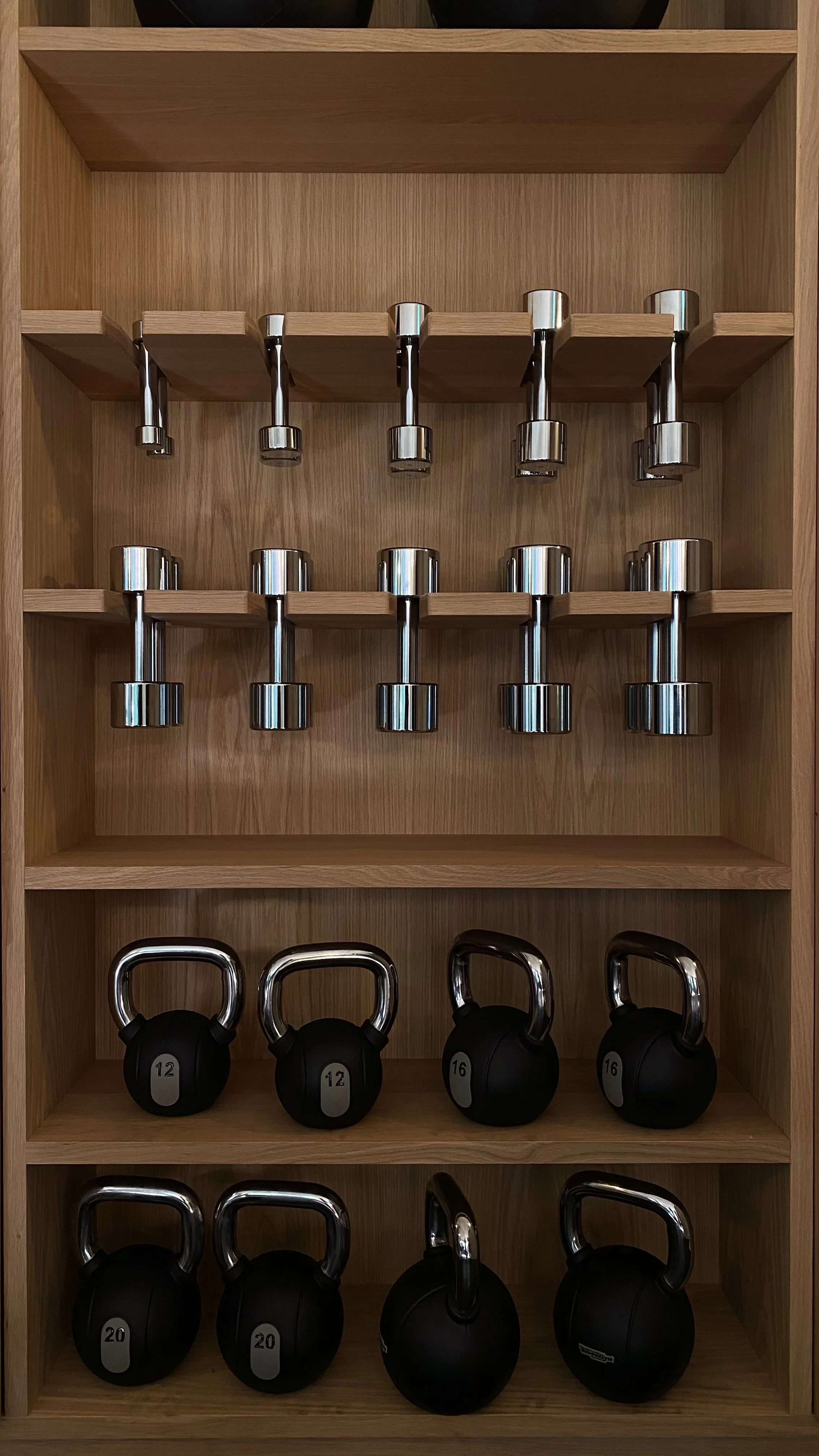
Not all exercise is equal for PCOS — and the research is really clear on this. A mix of strength training and moderate cardio gives you the most benefit across hormones, insulin, and mental health.
Strength training
2–3× per week · 30–45 mins
The most impactful exercise type for insulin resistance. Building muscle means your body has more tissue to absorb glucose — reducing the demand on insulin. Resistance training also supports bone density and metabolic rate long-term.
Weights - Bodyweight - Resistance bands - Pilates
★ Highest evidence for PCOS
Moderate cardio
3–4× per week · 30–45 mins
Brisk walking, cycling, swimming, and dancing all improve cardiorespiratory fitness and directly reduce insulin resistance. The key is "moderate" — you should be able to hold a conversation. High intensity every session can backfire by raising cortisol.
Walking - Cycling - Swimming - Dancing
★ Strong evidence for PCOS
HIIT
1× per week max · 20–30 mins
High-intensity interval training shows promising results for PCOS — but it needs to be used carefully. Once a week is plenty. Too much HIIT raises cortisol significantly, which can worsen symptoms. Think of it as a flavour, not the whole diet.
Circuit training - Sprint intervals - HIIT classes
⚠ Use sparingly with PCOS
Mindful movement
2–3× per week · Any duration
Yoga and Pilates actively reduce cortisol, support the parasympathetic nervous system, and improve body awareness. Research shows yoga specifically improves hormonal balance and reduces anxiety in PCOS — making it much more than "just stretching."
YogaPilatesTai chiStretching
★ Especially good for stress & hormones
Sample week
A Beginner-Friendly Weekly Plan
This isn't a prescription it's a starting point. Adjust the days, swap the activities, and most importantly: listen to your body. Some weeks you'll do more. Some weeks, less. Both are fine.
Daily step goal: aim for 8,000 steps every day
Aim for 8,000 steps every day - ideally working up to 10,000 over time, but 8,000 is a brilliant and achievable starting point. This doesn't have to be a dedicated walk it accumulates through your whole day. Parking further away, taking the stairs, walking after meals. Consistent daily steps are one of the most powerful and underrated tools for blood sugar and insulin management with PCOS.
MON
Strength training
30 min · bodyweight
+ 8k steps
TUS
Brisk walk
30 min · outdoors
+ 8k steps
WED
Yoga or Pilates
30 min · gentle
+ 8k steps
THU
Strength training
30 min · bodyweight
+ 8k steps
FRI
Walk or cycle
30–40 min
+ 8k steps
SAT
HIIT or activity you love
20–25 min
+ 8k steps
SUN
Rest or gentle walk
+ 8k steps
My story
What Exercise Has Done for My PCOS
"I stopped exercising to punish my body and started moving to take care of it - and it changed the entire direction of my life."
For a long time, my relationship with exercise was all-or-nothing. I'd go hard for a few weeks, exhaust myself, then stop completely. My cortisol was through the roof and my symptoms reflected it - worse bloating, irregular cycles, and constant fatigue.
When I finally started treating exercise as something I did for my health rather than my appearance, everything shifted. I started with walks. Then added two strength sessions a week. Then I found Pilates and something genuinely clicked.
I fell so deeply in love with the way Pilates made me feel -strong, connected to my body, calm - that I decided to train as an instructor. What started as a tool to manage my PCOS became my passion and my career. I now teach Pilates because I know firsthand how transformative mindful movement can be for women with PCOS.
Certified Pilates instructor
I'm sharing all of this because I want you to know: movement doesn't have to feel like punishment. It can be something you genuinely look forward to. The right type of movement - for your body, your hormones, your lifestyle - is out there. And when you find it, it really does change everything.
What shifted when I found consistency
More regular cycles within 2–3 months of consistent movement
Significantly less bloating and digestive discomfort
Better sleep quality - falling asleep and staying asleep
Reduced anxiety and fewer mood crashes
Steadier energy throughout the day - no 3pm crashes
Less intense sugar cravings
A genuinely different (kinder) relationship with my body
Fell in love with Pilates and became a certified instructor
Want to try Pilates for your PCOS? As a certified instructor who has used Pilates to manage my own symptoms, I know exactly how to approach it in a way that supports your hormones, your energy, and your body. Stay tuned for more on this in my blogs!