

Why Women with PCOS Should Care About What's in Their Shampoo And What I Found That Actually Works
If you're living with PCOS, you've probably already overhauled your diet, rethought your exercise routine, and spent more time than you'd like researching supplements. But here's one area that often flies under the radar - what you're putting on your body, not just in it.
I know. It sounds like a lot. Trust me, I was skeptical too.
But after falling down the rabbit hole of endocrine disruptors (more on that in a second), I became genuinely obsessed with cleaning up my personal care routine. Shampoo was the obvious place to start. It's something most of us use daily, it sits on your scalp and skin, and conventional formulas are often loaded with ingredients that can interfere with the very hormones we're already fighting to balance.Why I'm So Picky About Shampoo Ingredients
Living with PCOS has turned me into that person who reads every single ingredient on everything. I know, I know - it's a bit much. But when your hormones are already doing their own chaotic thing, you really don't want to add hormone disruptors to the mix through your daily routine.
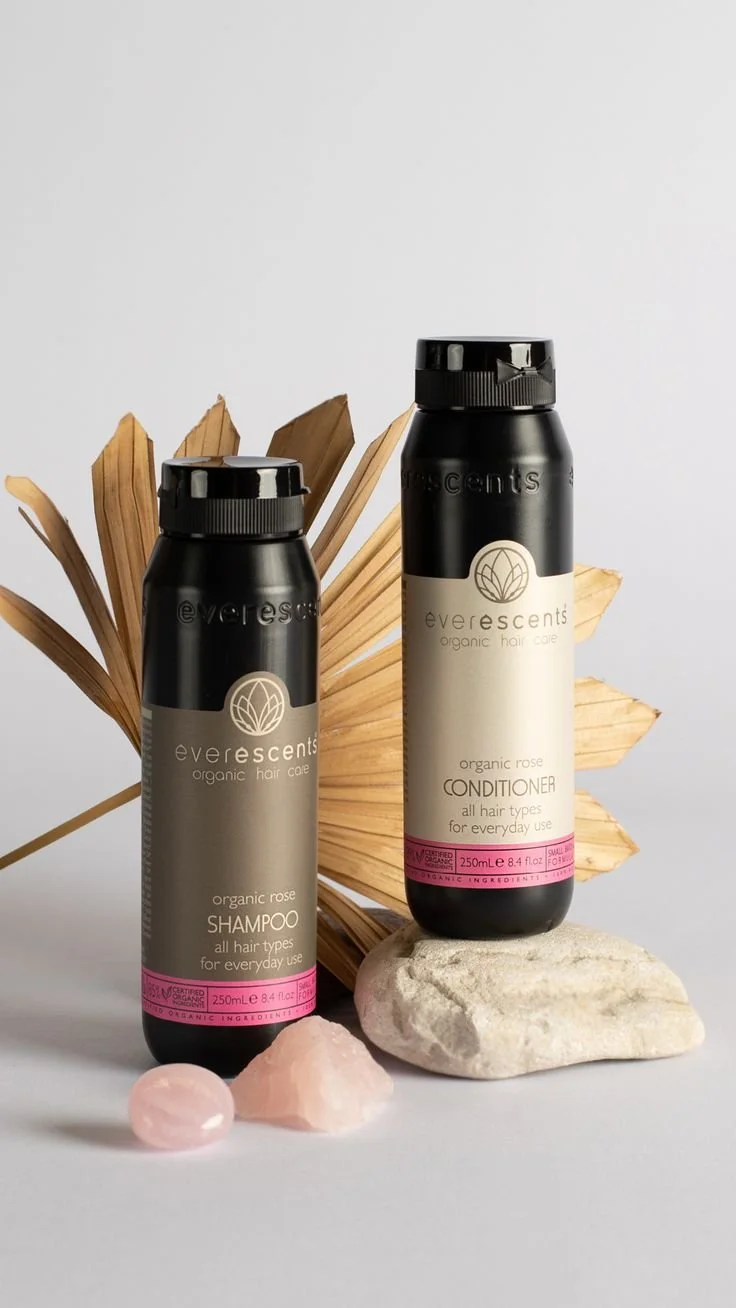
The PCOS and Hormone Disruptor Connection You Need to Know About
Here's the science bit, and I promise I'll keep it simple.
PCOS (Polycystic Ovary Syndrome) is fundamentally a hormonal condition. It's the most common endocrine disorder in women of reproductive age, affecting around 1 in 10 Australian women according to Jean Hailes for Women's Health. The condition involves disrupted hormone signalling, often including elevated androgens (male hormones) and insulin resistance, which creates a cascade of symptoms from irregular periods to skin and hair issues.
Now, here's where your shampoo comes in.
Many conventional shampoos contain hormone disruptors - chemicals that mimic, block, or interfere with your body's natural hormones. The big offenders are:
Parabens (methylparaben, propylparaben etc.) - used as preservatives, these have been shown in research published on NCBI's PubMed database to exhibit weak oestrogenic activity, meaning they can mimic oestrogen in the body. For someone with PCOS whose hormonal balance is already compromised, this is the last thing you need.
Synthetic fragrances - that word "fragrance" or "parfum" on a label can legally represent a cocktail of hundreds of undisclosed chemicals, some of which are known endocrine disruptors.
Sulfates (SLS/SLES) - while primarily a scalp irritant rather than a hormonal concern, these harsh detergents can strip the scalp's natural oils and exacerbate the scalp sensitivity and hair thinning that many women with PCOS already experience.
The WHO and several international health bodies have flagged endocrine-disrupting chemicals (EDCs) as a global concern, noting their potential link to reproductive disorders - which, for women managing PCOS, makes minimising exposure a genuinely reasonable goal.
Enter: Ethical Brand Co.'s Organic Moisture Shampoo
When I first picked this up, I did what I always do flipped it over and read the entire ingredient list before anything else. (A habit PCOS has firmly gifted me.)
What caught my attention straight away? It opens with organic aloe vera rather than water. That might sound like a small thing, but aloe vera brings its own benefits. It's naturally soothing, anti-inflammatory, and rich in vitamins and amino acids that support scalp health. Starting with a functional ingredient rather than a filler is a good sign.
The rest of the formula holds up too:
Coconut-derived cleansers instead of harsh sulfates - effective cleaning without stripping
Rosemary and nettle extracts - both have solid traditional and emerging clinical support for scalp circulation and hair strength. A 2015 study published in SKINmed Journal found rosemary oil comparable to minoxidil for hair regrowth, which is notable given that hair thinning is a common PCOS complaint
Essential oils for fragrance rather than synthetic "parfum" - so you actually know what you're smelling
No parabens, no sulfates, no synthetic fragrances - all the usual suspects are absent
The formula claims 85% certified organic and 99% naturally derived ingredients. For a product that actually has to clean your hair, that's a genuinely impressive number.
The Honest Bit: It's Not Perfect
Let's talk about the "clean beauty" reality check.
There are still some preservatives in the formula that aren't the most natural options on the market. If you're a true purist chasing 100% toxin-free, this might not be your endpoint. And that's okay - knowing that is useful information.
But here's my honest take: "good enough" can still be really, really good.
For most women especially those navigating PCOS and trying to reduce their overall chemical load. This shampoo represents a significant step in the right direction. You don't have to be perfect to make meaningful progress. Trading a paraben-heavy, sulfate-laden conventional shampoo for this formula is a genuine win for your endocrine system, even if it's not the absolute cleanest option theoretically available.
The clean beauty world can sometimes turn into an all-or-nothing trap. Don't let it. Small, consistent improvements add up.
Does It Actually Work?
Because all the clean credentials in the world mean nothing if your hair looks dull and unwashed by 2pm.
Short answer: yes, genuinely.
It lathers well. Something that surprises a lot of people switching from sulfate-based shampoos, since that foamy lather is actually a sulfate thing. My hair felt clean without that squeaky-stripped feeling. It's soft, manageable, and has a warm, earthy scent from the cinnamon and patchouli blend that honestly smells more like a high-end salon than something you'd find in a pharmacy aisle.
For hair that's been through the hormonal rollercoaster - the thinning, the texture changes, the scalp sensitivity - having a shampoo that works with your hair rather than adding to the damage is a genuine relief.
The 1-litre bottle is also a practical win. Once you break the cost down per wash, it's competitive with mid-range conventional brands, and you're getting far more for your money in terms of ingredient quality.
The Bottom Line
If you have PCOS and you're still using a mainstream shampoo loaded with sulfates, parabens, and synthetic fragrances, switching to something like Ethical Brand Co.'s Organic Moisture Shampoo is one of the lowest-effort, highest-impact changes you can make to your daily routine.
Will it cure your PCOS? Of course not nothing in a bottle does that. But reducing your daily exposure to hormone disruptors through your personal care products is a legitimate, evidence-informed strategy for supporting your endocrine system alongside everything else you're already doing.
It's Australian-made, it performs well, and it takes the question of "am I accidentally making my hormones worse with my shampoo?" completely off the table.
Sometimes the best product isn't the most perfect one. It's the one that genuinely moves you forward.
The information in this article is for general informational purposes only and does not constitute medical advice. Always consult a qualified healthcare professional regarding your individual health needs. Sources referenced include Jean Hailes for Women's Health, NCBI/PubMed, and WHO guidelines on endocrine-disrupting chemicals.
