

The New Food Pyramid: What Changed & What It Means for Your Health
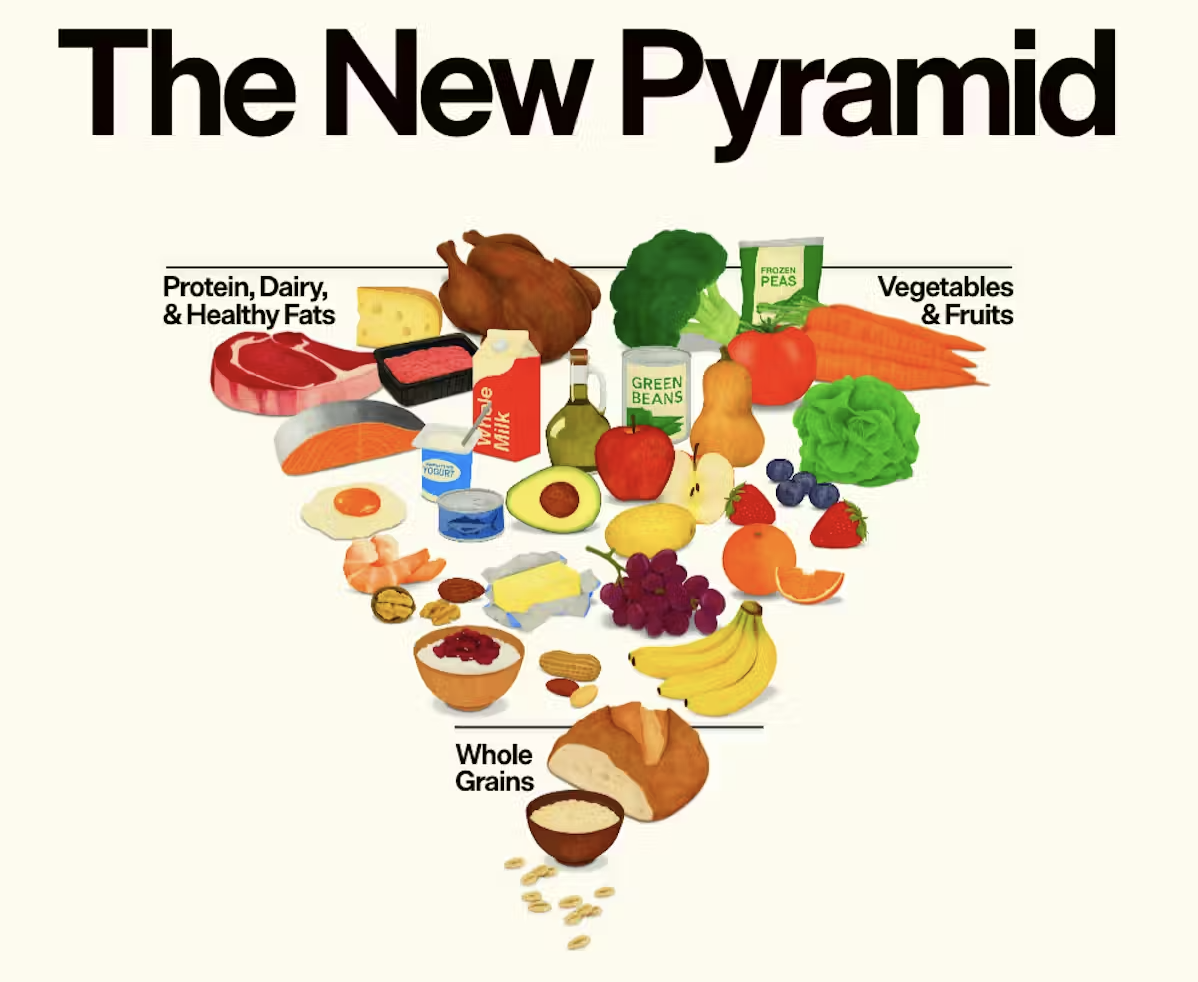
If you've been paying attention to health news lately, you've probably seen headlines about America's dramatic new dietary guidelines and the completely flipped food pyramid that came with them. And if you're feeling confused about what this all means trust me, you're not alone.
In January 2025, the US released the most controversial dietary guidelines in decades. The traditional food pyramid we've all grown up with? Completely turned upside down. Literally. And the recommendations inside have nutrition experts, scientists, and health professionals deeply divided.
So what actually changed? Why is everyone arguing about it? And most importantly what does this mean for you and your family's health?
Let's break down what happened, separate the science from the politics, and figure out what actually matters for your wellbeing.
What Actually Changed: The Upside-Down Pyramid
The most visually striking change is the new inverted food pyramid. Instead of grains forming the wide base (meaning eat lots of them) and fats at the tiny top (meaning eat sparingly), the new pyramid has literally been flipped.
At the wide top the biggest portion you'll now see:
Protein (meat, poultry, seafood, eggs)
Dairy (full-fat dairy products)
Healthy fats (from whole food sources)
Vegetables and fruits (given equal importance)
At the narrow bottom the smallest portion:
Whole grains
The visual message is clear: prioritise protein and healthy fats, eat plenty of vegetables and fruits, and limit your grain intake to whole grains only.
The "Eat Real Food" Message
Beyond the pyramid flip, the guidelines have one overarching message eat real food.
For the first time, the dietary guidelines explicitly call out ultra-processed foods as harmful. The recommendations state: "Avoid highly processed packaged, prepared, ready-to-eat, or other foods that are salty or sweet" and "avoid sugar-sweetened beverages, such as soda, fruit drinks, and energy drinks."
This is actually huge. Previous guidelines danced around processed foods without directly condemning them. Now, the government is saying clearly: these foods are problematic for your health.
The Major Shifts in Detail
1. The Protein Push
The new guidelines dramatically increase protein recommendations to 1.2 - 1.6 grams per kilogram of body weight per day. For a 70kg person, that's 84-112 grams of protein daily. Which is significantly more than previous recommendations.
The guidelines emphasise "high-quality, nutrient-dense protein" at every meal, with a particular focus on animal sources: meat, poultry, seafood, and eggs. Plant proteins like beans and legumes are mentioned, but animal protein takes centre stage.
2. The End of the "War on Fat"
Full-fat dairy is now recommended (three servings daily), and the guidelines actively promote consuming fats from whole food sources like meat, eggs, full-fat dairy, nuts, seeds, and avocados.
The message is clear: healthy fats aren't the enemy we once thought they were. However - and this is important - the guidelines still maintain that no more than 10% of calories should come from saturated fat.
3. Whole Grains vs Refined Grains
While whole grains remain recommended (two to four servings daily), there's now a sharp distinction between whole grains and refined carbohydrates. The guidelines significantly discourage highly processed, refined carbs like white bread, crackers, and packaged foods.
4. War on Added Sugar
The guidelines take the hardest stance on added sugar we've ever seen. They state: "No amount of added sugars or non-nutritive sweeteners is recommended or considered part of a healthy or nutritious diet."
For children aged four and under, the recommendation is to completely avoid added sugar. This is a massive shift from previous guidelines that were much softer on sugar, especially for kids.
The Controversy: Where Science and Politics Collide

Here's where things get messy. Three Harvard nutrition scientists who spent two years on the scientific advisory committee, reviewing thousands of studies and producing a comprehensive evidence-based report, have raised serious concerns about how their work was handled.
Their report recommended a plant-forward eating pattern with emphasis on plant proteins to reduce cardiovascular disease risk. The final guidelines did the opposite, prioritising animal protein and full-fat dairy.
Professor Teresa Fung from Harvard noted "The emphasis on animal protein, especially red meats, stood out... With the high emphasis on meat, direct mention of butter and beef tallow, and emphasis of full-fat dairy, it would be difficult to stick to the recommendation to consume no more than 10% calories from saturated fat."
Stanford nutrition expert Christopher Gardner, also on the advisory committee, said "I'm very disappointed in the new pyramid that features red meat and saturated fat sources at the very top, as if that's something to prioritise. It does go against decades and decades of evidence and research."
The concern isn't just about the recommendations themselves it's about transparency and process. As Harvard's Deirdre Tobias stated "There has not been transparency in who wrote the new guidelines... The reviews deviate significantly from the rigorous process that HHS developed to ensure the evidence base was replicable, unbiased, transparent, and free from non-scientific influences."
Multiple nutrition organisations, including the American Society for Nutrition and the Academy of Nutrition and Dietetics, have expressed concerns that the guidelines depart from established scientific review processes.
What's Actually Backed by Science And What Isn't
Let's separate what we know from what's controversial:
The Good: What Science Supports
Ultra-processed foods are harmful. There's strong and growing evidence that highly processed foods contribute to chronic disease, obesity, and poor health outcomes. Calling this out explicitly is genuinely important and evidence-based.
Added sugar is problematic. The evidence is clear that excessive added sugar contributes to obesity, diabetes, heart disease, and numerous other health issues. The hard line on sugar, especially for children, is well-supported by research.
Whole foods matter. Emphasising whole, minimally processed foods over packaged, refined products is absolutely supported by nutrition science.
Protein is important. Adequate protein intake supports muscle health, metabolic function, and satiety. Many people, especially older adults, could benefit from ensuring adequate protein.
The Controversial: What's Debated
Prioritising animal protein over plant protein. The scientific advisory committee's report actually recommended emphasising plant-based proteins to reduce cardiovascular disease risk. The shift to prioritising animal protein contradicts this evidence-based recommendation.
Full-fat dairy emphasis. While dairy can be part of a healthy diet, the strong push for full-fat dairy (three servings daily) raises concerns about saturated fat intake, especially given the maintained limit of 10% calories from saturated fat.
Downplaying plant-based eating patterns. Decades of research support plant-forward eating patterns for heart health and longevity. The new guidelines seem to minimise this evidence.
Essential fatty acids messaging. The guidelines mention essential fatty acids but highlight foods (like butter and beef tallow) that are actually low in these nutrients. Essential fatty acids come primarily from plant oils and fatty fish. Foods that are notably absent or downplayed in the guidelines.
What This Means for You Practically Speaking
So how do you navigate this? Here's my take as someone who values evidence-based wellness:
Take What's Useful
The "eat real food" message is brilliant. Focus on whole, minimally processed foods. Cook at home more. Avoid packaged, processed foods laden with added sugars, refined grains, and long ingredient lists. This is genuinely good advice.

The emphasis on protein is useful for many people, especially if you're older, very active, or trying to maintain muscle mass. Just remember that protein can come from both plant and animal sources.
The hard line on added sugar is important. Reducing sugar-sweetened beverages and added sugars in your diet will benefit your health.
Be Critical About the Rest
You don't need to eat animal protein at every meal to be healthy. Plant proteins like beans, lentils, chickpeas, tofu, tempeh are nutrient-dense, high in fibre, and associated with positive health outcomes.
You don't need three servings of full-fat dairy daily. If dairy works for you and you enjoy it, great. But it's not essential, and many people thrive without it or with lower amounts.
Whole grains are valuable sources of fibre, B vitamins, and minerals. Don't relegate them to the smallest part of your diet unless you have a specific reason to limit them.
Healthy fats should include plant sources rich in polyunsaturated fats things like extra virgin olive oil, avocados, nuts, seeds, and fatty fish. These are supported by decades of research for heart health.
Remember: One Country's Guidelines Don't Determine Your Health
These are American guidelines, developed in a specific political climate, with industry lobbying and political considerations at play. They don't override the body of global nutrition science, and they don't dictate what's right for you individually.
Australia has its own dietary guidelines, developed through different processes. Other countries have their approaches. The Mediterranean diet one of the most studied and health-promoting eating patterns looks quite different from this new pyramid.
What Actually Matters for Your Health
Here's what I want you to take away from all this controversy:
Eat mostly whole, minimally processed foods. This is the one thing everyone agrees on, and it's probably the most important dietary change most people can make.
Include plenty of vegetables and fruits. Again, universal agreement here. These should make up a significant portion of your plate.
Get adequate protein from quality sources. Whether that's mostly plant-based, mostly animal-based, or a mix is up to you. Both can work. Focus on what makes you feel good and aligns with your values.
Limit added sugars and refined carbohydrates. The evidence here is strong. These contribute to chronic disease and don't support your health goals.
Choose healthy fats from whole food sources. Nuts, seeds, avocados, olive oil, fatty fish—these are consistently associated with good health outcomes.
Don't stress about following any pyramid perfectly. Your diet should be sustainable, enjoyable, and make you feel good. It should fit your culture, preferences, budget, and lifestyle.
The Bigger Picture - Food Politics Are Real
This controversy is a reminder that nutrition guidelines aren't developed in a vacuum. There are enormous financial interests at stake. The meat industry, dairy industry, grain industry, and processed food industry all have billions of dollars riding on these recommendations.
The dietary guidelines influence federal feeding programs including school lunches, military meals, and nutrition programs for low-income families. They shape what foods are subsidised, what's promoted, and what people believe is healthy.

When scientists who spent two years reviewing evidence express concern that their findings were ignored or contradicted, we should pay attention. When major nutrition organisations question the transparency and process, that matters.
Does this mean the guidelines are entirely wrong? No. But it means we should be critical consumers of nutritional information, even when it comes from official sources.
The Bottom Line
The new US food pyramid represents a dramatic shift in nutrition policy, and it's deeply controversial for good reason. While some recommendations like eating real food and avoiding ultra-processed products are well-supported by science, other shifts seem to prioritise certain industries over evidence-based advice.
For you, the takeaway is this focus on what's consistently supported by decades of research across multiple countries and contexts. Eat mostly whole foods. Include plenty of plants. Get adequate protein from quality sources. Limit added sugars and highly processed foods. Choose healthy fats.
And remember no single pyramid, guideline, or eating pattern is the only path to health. Your best diet is one that's nutritious, sustainable, culturally appropriate, and makes you feel genuinely good in your body.
The most important thing isn't whether you're following the new pyramid, the old pyramid, or no pyramid at all. It's whether you're nourishing your body with foods that support your health, energy, and wellbeing over the long term.
What are your thoughts on the new food pyramid? How has it changed how you think about nutrition? Share in the comments!
Disclaimer:
The information in this article is for educational purposes only and is not intended as medical or nutritional advice. Always consult with a qualified healthcare provider, registered dietitian, or nutritionist about the best dietary approach for your individual needs. The views expressed are the author's own, and Gro.w is not liable for any outcomes from following the information provided.
