Your Summer to Autumn Skin Reset: A PCOS Perspective
Summer in Australia is brutal on your skin. The harsh UV, the humidity, the chlorine, the salt water. By the time autumn rolls around, your skin is usually showing the damage.
The good news? Autumn is the perfect time to reset and repair. As the intensity of summer fades and the weather starts to cool, your skin needs a different approach. Here's how I transition my skincare routine from summer to autumn, and why it matters.
Why Seasonal Transitions Hit Differently With PCOS
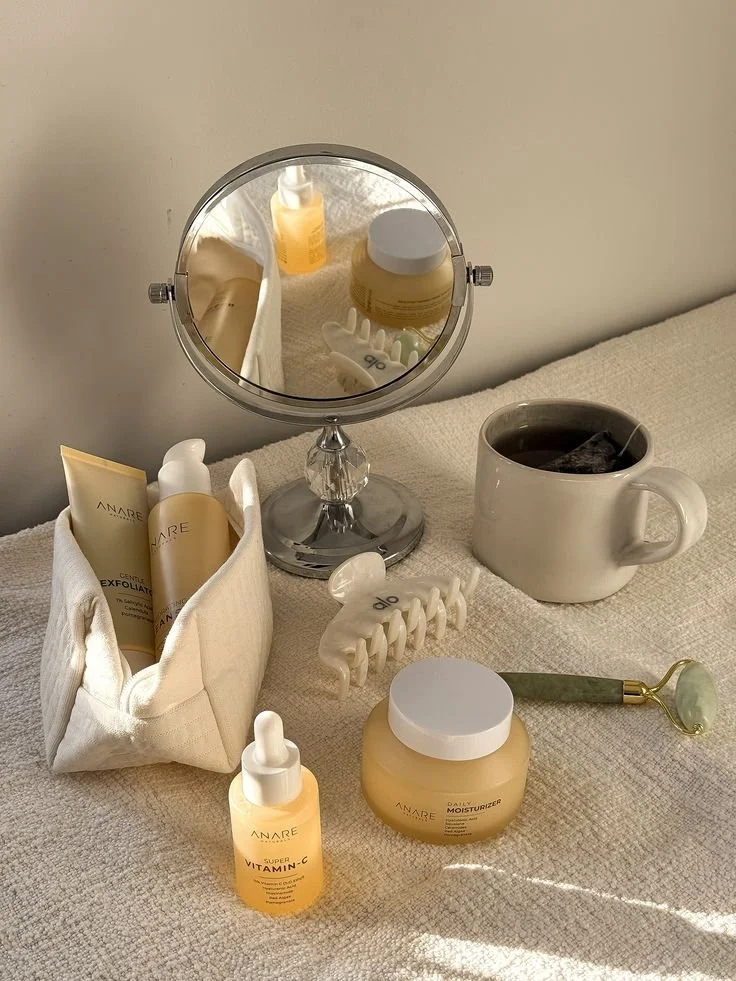
Most people need to adjust their skincare when the seasons change. But for women with PCOS, the stakes are a bit higher.
PCOS is fundamentally an inflammatory and endocrine condition. Jean Hailes for Women's Health describes chronic low-grade inflammation as a key driver of PCOS, and that inflammation doesn't stay internal. It shows up on your skin too. Think: increased sensitivity, slower barrier recovery, more reactive breakouts, and a complexion that seems to need twice the effort for half the results.
Add in the fact that androgens (elevated in many women with PCOS) stimulate sebaceous glands to produce more oil, and summer's heat and humidity become a particularly challenging combination. Your skin is already dealing with a hormonal load before the Australian sun even enters the equation.
The seasonal shift to autumn is your opportunity to properly address the damage and recalibrate - not just for aesthetics, but for actual skin health.
Step One: Assess What Summer Actually Did
Before you change anything, take an honest look at what you're working with.
Are you seeing more pigmentation or sun spots than you had a few months ago? Is your skin congested from layers of sunscreen and sweat? Has your texture changed? Does your skin feel reactive or easily irritated?
For those of us with PCOS, I'd add a couple of extra questions: Has your hormonal acne been worse than usual over summer? Has the heat aggravated any skin sensitivity? Understanding what's actually going on helps you choose the right approach rather than just throwing products at the problem.
For me, summer reliably brings some pigmentation, texture changes, and a congested T-zone. That's where I start.The Deep Clean
The first thing I do when transitioning to autumn is give my skin a proper deep clean.
Summer buildup, excess oil, sunscreen residue, sweat. all of it needs to go. I do a gentle but thorough exfoliation to remove dead skin cells and prepare my skin to actually absorb the products I'm about to introduce.
I use a gentle enzyme exfoliant or a very mild physical scrub. Nothing too harsh, because summer sun exposure can leave skin sensitised. The goal is to refresh, not irritate.
I also incorporate oil cleansing more regularly. It dissolves all that sunscreen and buildup without stripping my skin, which is important as the weather starts to dry out.
Step Two: The Deep Clean
The first thing I do when transitioning into autumn is a proper deep clean but with PCOS skin, "deep" and "gentle" need to coexist.
Summer leaves behind sunscreen residue, excess oil, sweat, and environmental buildup. All of it needs to go. I use a gentle enzyme exfoliant rather than anything abrasive, because summer UV exposure often leaves the skin sensitised even when it doesn't look it, and PCOS-related inflammation means your barrier is potentially more compromised than the average person's.
Oil cleansing has also become a non-negotiable part of my transition routine. It dissolves sunscreen and buildup thoroughly without stripping the skin's acid mantle. That slightly acidic protective layer that keeps bacteria out and moisture in. Stripping it is the last thing you want when you're already managing hormonally-driven breakouts.
The goal here is to refresh and prepare, not to irritate.
Step Three: Address the Pigmentation
If summer left you with sun spots or uneven tone, autumn is the time to tackle it and this is especially relevant for women with PCOS.
Hyperandrogenism (elevated androgens) can increase melanin production, making PCOS skin more prone to post-inflammatory hyperpigmentation - those dark marks that linger after a breakout. Layer summer UV exposure on top of that, and uneven tone becomes a genuine challenge.
I incorporate brightening actives at this point: vitamin C for antioxidant protection and pigmentation fading, niacinamide for tone-evening and sebum regulation (a genuine two-for-one for PCOS skin), and gentle AHAs for cell turnover.
Consistency is everything here. You won't see overnight results, but used regularly through autumn, these ingredients make a meaningful difference. I apply them in the morning under sunscreen because yes, SPF is non-negotiable even in autumn. The UV index drops, but UV damage absolutely does not take a break. In Australia particularly, the Cancer Council recommends daily SPF 30+ whenever the UV index reaches 3 or above, which in most parts of the country happens year-round.Switch to Richer Hydration
As the air gets drier, my skin needs more moisture. What worked in humid summer weather won't cut it anymore.
Step Four: Repair Your Skin Barrier
This is the step I consider most critical for PCOS skin, and the one most people skip over.
Your skin barrier (the outermost layer that keeps moisture in and irritants out) takes a serious hit over summer. UV exposure, chlorine, salt water, and the over-exfoliation that often comes with trying to manage summer congestion all compromise its integrity. For women with PCOS, where chronic inflammation is already undermining barrier function, this compound damage is real.
A compromised skin barrier makes everything worse: breakouts become more frequent, sensitivity increases, products sting that never used to, and no amount of moisturiser seems to help because moisture is escaping faster than you can apply it.
Barrier repair means ceramides, fatty acids, and cholesterol - the actual structural components your skin barrier is made from. These aren't trendy marketing ingredients; they're what your skin literally needs to rebuild.
I also pull back on potentially irritating actives for a couple of weeks at this point - no strong retinoids or high-percentage acids until my barrier feels stable again. It's tempting to try to fast-track results, but pushing through a compromised barrier just extends the damage.
Step Five: Switch to Richer Hydration
As the air dries out in autumn, your skin's needs shift and this is where your clean beauty choices really matter for PCOS.

I swap my lightweight summer moisturiser for something more nourishing and occlusive. Not necessarily thick or greasy, but genuinely richer. Something that creates a seal over the skin and prevents moisture loss throughout the day and night.
Under my moisturiser, I add a hydrating serum. Hyaluronic acid is the obvious choice here. It's well-documented in dermatological research for its ability to attract and retain moisture in the skin, and it plays well with essentially everything else in a routine.
One thing I'm careful about in this step is checking that what I'm switching to is free from hormone disruptors. It sounds like a lot to ask of a moisturiser, but parabens and synthetic fragrances (both common in conventional formulas) are endocrine-disrupting chemicals (EDCs) that can interfere with hormonal signalling. When you're applying something twice daily as part of your skin barrier repair strategy, the last thing you want is to be inadvertently adding to your hormonal load.
At night I often add a facial oil over my moisturiser. My skin absorbs it in a way it simply didn't during summer's humidity, and it makes a noticeable difference to how I look in the morning.
Step Six: Reintroduce Targeted Treatments Gradually
Autumn is when I bring back the stronger actives I largely avoid over summer.
Retinol for skin texture and cell turnover. Chemical exfoliants for regular renewal. Targeted serums for specific concerns. For PCOS skin, this might also mean reintroducing ingredients that specifically address androgenic effects - azelaic acid, for example, has evidence behind it for both acne and pigmentation, and it's generally very well tolerated.
The key word is gradually. One new product at a time, with a week or two for your skin to adjust before adding anything else. And continued diligence with SPF, because these ingredients increase photosensitivity.
Don't Forget Your Body
Your face isn't the only thing that needs a seasonal reset and for women with PCOS, body skin deserves attention too.
Keratosis pilaris (those small bumps on the arms and thighs) tends to worsen in dry weather and is more common in women with PCOS and insulin resistance. Dry brushing before showers helps with both circulation and cell turnover, and switching to a richer body moisturiser applied while skin is still slightly damp makes a significant difference to how well it absorbs and how long the hydration lasts.
What to Avoid

Just as important as what to add is knowing what not to do.
Don't over-exfoliate in an attempt to fix summer damage quickly. This will only worsen inflammation and barrier compromise, both already elevated concerns with PCOS.
Don't pile on multiple new actives at once. Your skin needs time to adjust, and if something causes a reaction you won't know what the culprit is.
Don't skip SPF because it's cooler. This one can't be said enough.
And please don't expect instant results. Skin repair takes time, particularly when inflammation and hormonal factors are in play. Be patient and consistent.
Listen to Your Skin
The most important thing about seasonal transitions (especially with PCOS) is paying attention to what's actually happening with your skin, not just following a formula.
If a product that worked in summer suddenly feels too light, switch it. If your skin is tight or dull, add hydration. If you're breaking out more than usual, consider whether something new in your routine could be the trigger or whether a hormonal shift (stress, cycle changes, dietary choices) might be the underlying cause rather than a skincare issue.
Your skin is giving you information. PCOS means learning to read it a little more carefully than most..
The Bottom Line
Transitioning your skincare from summer to autumn with PCOS requires a bit more intentionality than the standard seasonal switch — but the payoff is real.
Assess what summer did. Deep clean gently. Repair your barrier before anything else. Switch to richer hydration with clean ingredients. Reintroduce targeted treatments gradually. Stay consistent with SPF. And be patient — your skin has been through a lot.
When you work with your skin's seasonal needs rather than against them, everything functions better. Give your skin the reset it's asking for.
Disclaimer:
The information in this article is for general informational purposes only and does not constitute medical advice. Always consult a qualified healthcare professional regarding your individual health needs. Sources referenced include Jean Hailes for Women's Health, Cancer Council Australia, NCBI/PubMed, and WHO guidelines on endocrine-disrupting chemicals.
